Chapter 7: The Crooked Tree
When December finally rolled around again, I did not book a ticket to Aspen. I stayed home.
I went to a local lot and bought a Douglas Fir that was entirely too tall for my modern condo living room. I decorated it myself, and I did a phenomenally terrible job. It leaned aggressively to the left.
I hosted Christmas Day. I invited Aunt Lisa, Mark, Priya, two other friends who couldn’t fly home, Nathan, Lily, and Mason. It was a potluck. Everyone brought food. Nobody asked me to pay for a caterer. Nobody called me bad energy. Nobody treated my physical presence like a transactional arrangement.
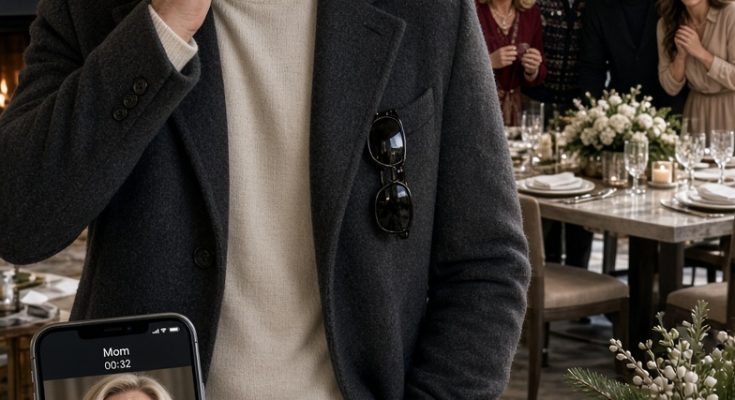
At exactly 11:52 AM on Christmas morning—one exact calendar year to the minute from the phone call that detonated my life—my phone rang on the kitchen counter.
It was Mom.
I stood there, staring at the glowing screen while a tray of homemade cinnamon rolls actively began to burn in the oven behind me. I took a deep breath, swiped the screen, and brought it to my ear.
“Merry Christmas, Caleb,” she said. Her voice was incredibly soft, lacking any of its usual sharp, demanding edges.
“Merry Christmas, Mom.”
“I am not calling to ask you for a single thing,” she stated quickly, sensing my hesitation.
I leaned back against the cool granite counter. “Okay.”
“I just… I just wanted to call and say that I hope you have a genuinely beautiful day today.”
The silence that settled between us after that sentence was vastly different from the silences of the past. It felt less like a tactical trap waiting to be sprung, and more like a fragile, swaying rope bridge that neither of us entirely knew how to cross yet.
“Thank you, Mom,” I said, and to my surprise, I meant it. “I hope you and Dad have a good day, too.”
“Your father says hello.”
“Tell him I said hello back.”
Another long pause stretched over the line. Then, her voice cracked into a whisper. “I miss you, Caleb.”
I closed my eyes. The smell of burning sugar filled the kitchen. “I miss who I thought we were, Mom.”
She began to cry quietly into the phone. But this time, she did not demand that I cross the bridge to fix it. She didn’t ask for a wire transfer to stop the tears. She just let the sadness exist between us.
That mattered, too.
After we hung up, Nathan wandered into the kitchen, sniffing the air with a grimace. “Are those supposed to be cinnamon rolls, Caleb, or are you destroying forensic evidence?”
“Careful, Nathan,” I warned, grabbing an oven mitt. “I am still wealthy enough to throw a searing hot pastry directly at your head.”
He grinned, a genuine, relaxed smile. “Fair point.”
Lily sprinted into the kitchen, skidding in her socks, desperately asking if she could open just one present before dinner was served. Mason marched in right behind her, wearing a crumpled paper burger-king crown, and loudly declared that my Christmas tree looked “kind of crooked, but very brave.”
I looked out into the living room at the tree. It was crooked. It was incredibly, undeniably crooked. But it was standing on its own, firmly rooted in my home.
For thirty-four years, I sincerely believed that love was defined by utility. I thought familial loyalty meant endlessly paying, constantly rescuing, silently absorbing insults, and pretending not to notice when my designated seat at the holiday table came with a hidden invoice attached.
But love that is entirely dependent on your financial usefulness is not actually love. It is simply employment without the dignity of fair wages.
The year my parents uninvited me from Christmas, they thought they were punishing me by removing me from the family unit. What they actually did was inadvertently remove the toxic illusion I had been living under.
They finally showed me, with brutal clarity, that my money had always been welcome, even when my humanity was not. They showed me that a “peace” built entirely on my silent suffering was never actually peace. They showed me that their definition of “being mature” had always just meant swallowing their disrespect so nobody else had to experience the discomfort of accountability.
So, yes. I spent $37,000 on a solo ski trip to Aspen. People on the internet called it incredibly petty. My parents called it a betrayal.
Perhaps it was petty.
But it was also the very first time in my entire adult life that I spent my own money without desperately trying to purchase love from people who fundamentally confused access with affection.
That cold Christmas morning in Denver, when my mother called at 11:52 AM and frantically announced that the dinner was ruined because nobody could afford to host it, she expected my old programming to kick in. She expected panic. She expected crushing guilt. She expected Caleb the Fixer, Caleb the Bank, Caleb the desperate son who would always come running with an open checkbook.
Instead, I looked out at the majestic, indifferent mountains, took a breath of clean air, and asked, “Why would that be my problem?”
And that was the exact moment my life finally, truly became my own.
Like and share this post if you find it interesting! Let us know in the comments if you’ve ever had to run a “KPI Project” on your own family!